Odor Present on Delivery Ticket

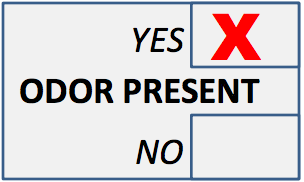
Odor Present -- Yes-No

Odor Present—Yes-No

The odor present box on your delivery ticket should ALWAYS be checked “yes”—it does not mean that there is a leak in your propane system.

Propane is a naturally odorless gas.

Typically, an odorant called mercaptan is added to propane to provide a distinctive odor or smell.

This allows the consumer to detect if there may be a problem with the propane system.

Please contact our office if you should require further assistance.

The History of Propane

The Discovery
In 1910, Dr. Walter O. Snelling, a chemist and explosives expert for the U.S. Bureau of Mines, was contacted to investigate vapors coming from a gasoline tank vent of a newly purchased Ford Model T. Dr. Snelling filled a glass jug with the gasoline from the Ford Model T and discovered on his way back to the lab that volatile vapors were forming in the jug, causing its cork to repeatedly pop out. He began experimenting with these vaporous gases to find methods to control and hold them. After dividing the gas into its liquid and gaseous components, he learned that propane was one component of the liquefied gas mixture. He soon learned that this propane component could be used for lighting, metal cutting, and cooking. That discovery marked the birth of the propane industry.

The Growth of an Industry

1912 Dr. Snelling and colleagues established the American Gasol Co., the first
commercial marketer of propane.
1913 Dr. Snelling sold his propane patent for $50,000 to Frank Phillips, the founder of
Phillips Petroleum Co. In 2002, Phillips Petroleum merged with Conoco Inc. to
form ConocoPhillips.
1918 Propane was primarily used for cutting metals. J.B. Anderson of Sharpsburg, PA
developed the first propane-fueled pumpless blowtorch.
1922 The Bureau of Mines, which is part of the U.S. Department of the Interior, began
tracking propane sales in the United States. National sales totaled 223,000 gallons.
1925 Propane sales reached 404,000 gallons—nearly doubling sales in just three years.
1927 Phillips Petroleum, now ConocoPhillips, began the research and development of
domestic appliances and gas equipment. The Tappan Stove Co. began producing
gas ranges. Today, Tappan Stove is part of Electrolux Home Products.
1928 The first bobtail truck was built to transport propane. Servel Inc., which went out of
business in 1958, produced the first propane refrigerator.
1929 Aggressive sales promotions and marketing pushed national sales to 10 million
gallons. The propane industry asset value was approximately $22 million.
1931 H. Emerson Thomas, George Oberfell, and Mark Anton founded the first propane
industry trade group called the National Bottled Gas Association in Atlantic City,
NJ.
1932 At the 1932 Olympics in Los Angeles, CA, propane powered all of the appliances
for cooking and heated the water in the Olympic Village.
1933 A propane odorant was developed to easily detect leaks.
1934 National sales reached 56 million gallons, due in great part to rapid industrial
growth.
1936 Twenty-pound cylinders, such as those used for grilling, were first introduced to
enhance portability.
1945 The end of World War II brought great industrial development, leading propane into
its so-called “Golden Years.” Sales reached 1 billion gallons.
1947 Sixty-two percent of all U.S. homes were equipped with either natural gas or propane ranges. Water heater sales rose 261 percent, and the first propane-fueled clothes dryer entered the marketplace. The first oceangoing tanker built for propane, the SS Natalie Warren owned by Warren Petroleum Corp., was launched; total capacity was 1.4 million gallons.
1950 The Chicago Transit Authority ordered 1,000 propane-fueled buses, and Milwaukee converted 270 taxies to run on propane. In addition, an estimated 7.5 million propane installations occurred on farms and in suburbs.
1955 Propane containers, equipment, and appliances were exposed to an atomic explosion at a federal test site in Nevada. After the explosion, all were in perfect working order, and the ranges were used to cook meals for the test personnel.
1958 National propane sales reached 7 billion gallons annually.
1961 Propane installations in the United States totaled 13 million tanks.
1962 The propane industry celebrated its 50th anniversary at its national convention in Chicago during May.
1963 The first 50,000-gallon tank car was built, and hot-air balloons began using propane.
1965 GATX built the world’s largest propane tank car, with a 60,000-gallon capacity.Chevrolet introduced four new truck engines designed for propane.
1973 Propane price controls were instituted in the wake of the Arab oil embargo. The propane industry trade association, now called the National Propane Association, opened its first Washington, DC office.
1977 The U.S. Department of Energy was established, and the Federal Energy Administration (FEA) began investigating propane pricing practices, which were then controlled by the U.S. government.
1981 President Reagan eliminated price controls on propane, gasoline, and crude oil.
1987 The National Liquefied Petroleum Gas Association (NLPGA) changed its name to the National Propane Gas Association, the national trade association representing the propane industry.
1990 Propane was listed as an approved, alternative clean fuel in the 1990 Clean Air Act and, two years later, was listed again as an alternative fuel in the Energy Policy Act of 1992.
1996 The Propane Education & Research Council (PERC) was authorized by the U.S. Congress with the passage of Public Law 104-284, the Propane Education and Research Act (PERA), signed into law on October 11, 1996. PERC’s mission is to promote the safe, efficient use of odorized propane gas as a preferred energy source.
2004 Today, propane is an $8 billion to $10 billion industry in the United States and is growing. The United States consumes more than 15 billion gallons of propane annually for home, agricultural, industrial, and commercial uses. Of the 101.5 million U.S. households, 8.1 million depend on propane for one use or another.


Sources:
Paul K. Haines, president, Trexler Haines Gas, Inc.
President, Pennsylvania Propane Gas Association, 1961
State Director, Pennsylvania Propane Gas Association, 1972-1976
District 9 Director, National Propane Gas Association, 1976-1996
Archives of the National Propane Gas Association (February, 2000)
U.S. Department of Energy (March, 2003)

Download PDF

Safe Grilling Tips for Outdoor Summer Fun

Grilling Tips
1. Always read and follow all the grill manufacturer’s instructions before turning on and lighting the grill. Keep the top open when lighting a propane grill, and don’t close it until you are sure grill is lit.

2. Season the meat before cooking and use a light hand. Whether you’re adding salt, pepper, or a custom rub, keep your hand about a foot above the meat to help distribute the spices evenly.

3.Start with a hot grill. When you place meat on the grill, it should sizzle. Searing meat locks in the juices and flavor and helps keep meat from sticking to the grill. Turn the grill on as high as possible, then place the meat on the grate, close the lid, and sear one side for 3 to 4 minutes. Then, reduce heat to medium for the remainder of the cooking time.

4. Most grilling is done with direct heat, or cooking items quickly at high temperatures. Place burgers, steaks, or your favorite tender beef cut directly over the grill burners. Use indirect heat when cooking less tender cuts of beef, such as brisket. The indirect low-and-slow method cooks meat at a lower temperature for a longer time. Simply turn off one set of burners and place beef on that side; radiant heat from the hot side will cook items slowly.

5.Keep your beef from drying out. First, don’t flip the meat more than a few times — just once, if possible. Turning meat too often makes it lose its natural juices, leaving it flavorless and dry. Second, always use tongs or a spatula — not a fork — to turn meat. Piercing the meat allows its flavorful juices to escape.

6. To make professional diamond grill marks, place the meat on the grill and sear it. After 3 to 4 minutes, turn it 90 degrees clockwise. Cook another two minutes, then flip and repeat.

7. Most experts say cooking a steak to medium rare ensures the best flavor and tenderness. Cook to 140 degrees Fahrenheit for rare; 145 degrees for medium rare; 160 degrees for medium; and 170 degrees for well done. Ground beef and burgers should always be cooked to 160 degrees. Use an instant-read meat thermometer to ensure perfect results.

8. When you’re finished cooking, remove the meat from the grill, put it on a clean plate, and let it rest for several minutes. Tent the clean plate loosely with foil to keep the meat warm. Letting cooked meat rest allows the juices to redistribute throughout the meat so they don’t escape after it is cut.

9. Turn off the burner control and close the cylinder valve. When a grill is not in use for extended periods of time, cover disconnected hose-end fittings with plastic bags or protective caps to keep them clean.

10. Properly transport and store gas cylinders. When refilling or replacing a propane cylinder, transport in a secure, upright (vertical) position in a well-ventilated area in your vehicle, and take it home immediately. Always use or store cylinders in a secure and upright position outdoors (not in a garage or shed).

DO:

  • Follow the grill manufacturer’s instructions and keep written materials handy.
  • Keep the top of the grill open until you are sure it is lit.
  • Cover disconnected hose-end fittings with plastic bags or protective caps to keep a grill clean when it is not in use.
  • Store propane cylinders outdoors in an upright (vertical) position.
  • If you smell gas, safely turn off the cylinder valve, turning it to the right (clockwise). Immediately leave the area and dial 911 or call your local fire department. Before you use the grill again, have a qualified service technician inspect your cylinder.

DON’T:

  • Smoke while handling a propane cylinder.
  • Use matches or lighters to check for propane leaks.
  • Pour an accelerant such as lighter fluid or gasoline on the grill.
  • Allow children to tamper with the cylinder or grill.
  • Use, store, or transport propane cylinders near high temperatures (this includes storing spare cylinders near the grill).
  • Try to be a grill repairman. If you are having grill or propane cylinder problems, see a qualified service technician.

For more information on propane safety, please log on to the consumer safety site at www.usepropane.com